

The Hidden Clock Against Water Damage
When a pipe breaks, a water heater splits, or a toilet overflows, time stops being a casual measurement—it becomes an expensive adversary. Within minutes, escaping water can soak through drywall, warp premium hardwood floors, and ruin subflooring material. Finding a puddle or a spraying pipe can feel incredibly overwhelming, but the steps you take during the 15 to 45 minutes before a professional plumbing truck rolls into your driveway will determine the scale of your property’s structural damage.
Handling a plumbing crisis requires moving from panic to a structured, deliberate action plan. By taking control of the situation, protecting your main electrical lines, and containing the water, you can protect your property and help your response technician get straight to work the moment they arrive. This practical guide walks you through the exact steps to stabilize your home during a sudden plumbing emergency.
Section 1: The Urgent Safety Protocol
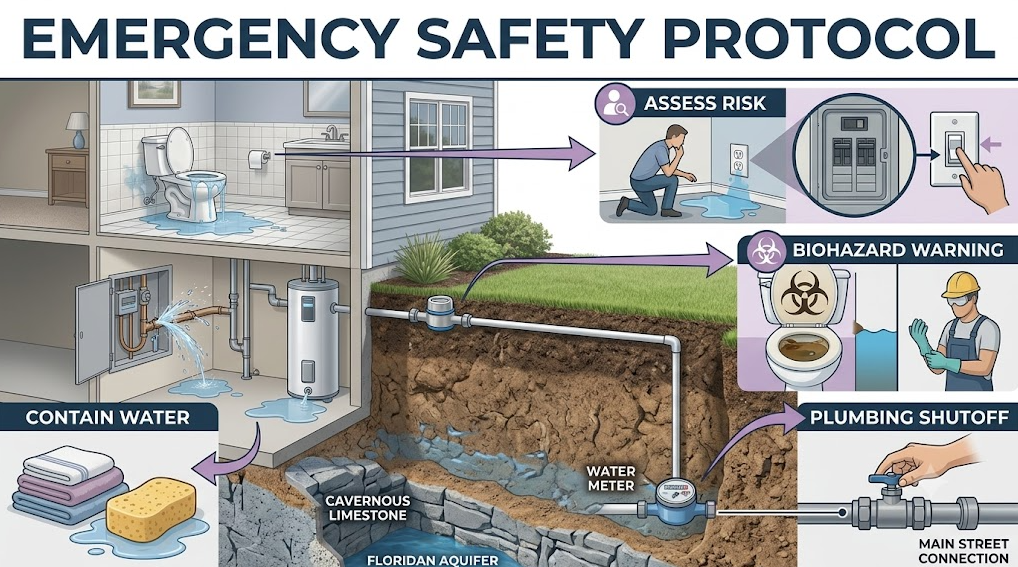
Before you grab a single tool or bucket, you need to ensure the environment is completely safe to work in. Water and electricity are a lethal combination.
- Assess the Electrical Risk: If flooding water has reached electrical outlets, baseboard heaters, or your home’s main breaker panel, do not step into the water. Walk around the wet area to a dry location and turn off the power to that zone at your main electrical panel.
- Avoid Biohazard Zones: If your emergency involves a major sewer backup or a failed septic line, avoid direct contact with the wastewater. This water contains harmful biological bacteria that require professional safety gear to handle.
Section 2: The Step-by-Step Stabilization Sequence
Once you have confirmed the area is safe to enter, follow this precise sequence to isolate the failure and prevent further damage.
1.Shut Off the Water Source:Immediate Priority.
Locate the closest valve to the leak. For toilets and sinks, turn the small chrome valve behind the fixture clockwise. For main line breaks, turn the main water shut-off valve near your water meter or street connection completely clockwise.
2.Turn Off the Water Heater:Within 5 Minutes.
If you have cut off the main water supply, turn off your water heater immediately. For gas units, twist the control knob to “Pilot.” For electric systems, flip the designated breaker off. Operating a water heater without a steady supply of incoming water can cause the tank to overheat or burn out its heating elements.
3.Open Outside Faucets:Within 10 Minutes.
After turning off your main valve, open your lowest outside garden hose spigots and indoor cold-water taps. This drains the remaining water out of your home’s internal piping framework, channeling the pressure away from the burst location.
4.Contain and Clear the Leak:Ongoing Care.
Place buckets, plastic bins, or heavy towels directly under active drips. Use a wet/dry shop vacuum to clear water off wood floors or carpets as quickly as possible to minimize structural damage.
Section 3: Identifying the Emergency
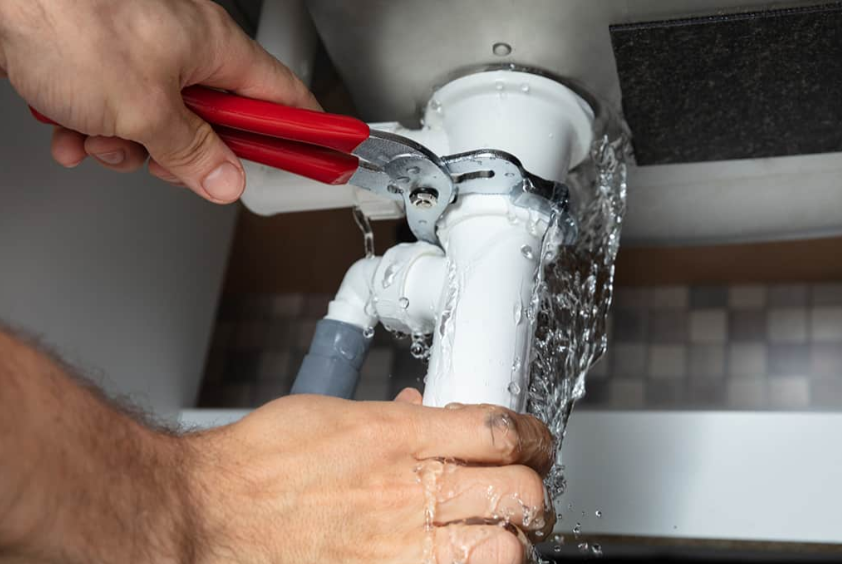
Not all plumbing emergencies behave the same way. Understanding what type of failure you are facing helps you give clear information to your dispatcher, ensuring the right tools are on the truck.
Common Residential Failure Modes
| Emergency Type | Primary Symptom | Critical Vulnerability | Immediate Mitigation |
| Ruptured Pipe | Spraying water behind walls or under cabinets | Structural drywall decay, mold growth | Isolate the main water valve immediately |
| Fixture Overflow | Toilet or sink continuously filling and spilling | Floor buckling, structural subfloor damage | Turn the local angle stop valve clockwise |
| Sewer Main Backup | Multiple drains gurgling and discharging waste | Biohazard contamination, health risks | Cease all indoor water usage immediately |
Section 4: What NOT to Do Before Help Arrives
While taking action is important, certain common mistakes can make a plumbing emergency worse or complicate eventual repairs:
- Do Not Use Chemical Drain Cleaners: If you are dealing with a completely blocked drain or a toilet backup, do not pour liquid chemical cleaners down the line. These harsh chemicals rarely clear a structural block, leave a corrosive pool of acid in your pipes, and can cause chemical burns to the plumbing crew working on the line.
- Do Not Force Frozen Valves: If an old main shut-off valve resists turning, do not use a heavy wrench to force it closed. Forcing a corroded valve can snap the metal stem, turning a manageable leak into a major, un-isolated water disaster.
- Do Not Ignore Minor Odors: A strong sulfur or sewer gas smell often points to a failing ventilation line or a broken sewer pipe beneath your foundation. Don’t wait for a full backup to address it.
Conclusion: Ready for the Rescue
By remaining calm, isolating the water supply, turning off your water heater, and containing the water, you can turn a potential property disaster into a manageable repair. These quick preventive steps help stabilize your home, minimize structural water damage, and keep your family safe while help is on the way.
Once you have completed these steps, keep the area clear so your technician can get straight to work fixing the problem the moment they step through your door.