

The Invisible Infrastructure
Owning a home with a private septic system comes with a major financial advantage: you do not have to pay monthly municipal sewer fees. However, that advantage comes with total personal responsibility for the treatment network buried beneath your lawn. When a city sewer line clogs, it is a municipal problem. When your septic tank backs up, the structural cleanup, yard excavation, and environmental restoration fall entirely on your shoulders.
Most severe septic problems do not happen overnight. They are the slow result of small, daily habits that gradually disrupt the biological breakdown of waste or mechanically choke your disposal lines. Understanding the early warning signs of a struggling system and learning how to avoid common pitfalls can save you thousands of dollars in emergency repairs. Let’s look at the main reasons septic networks fail and how you can protect your property’s infrastructure.
Section 1: The Three Most Destructive Septic Failures
While a septic system has several parts, most issues stem from three distinct failure points within the network.
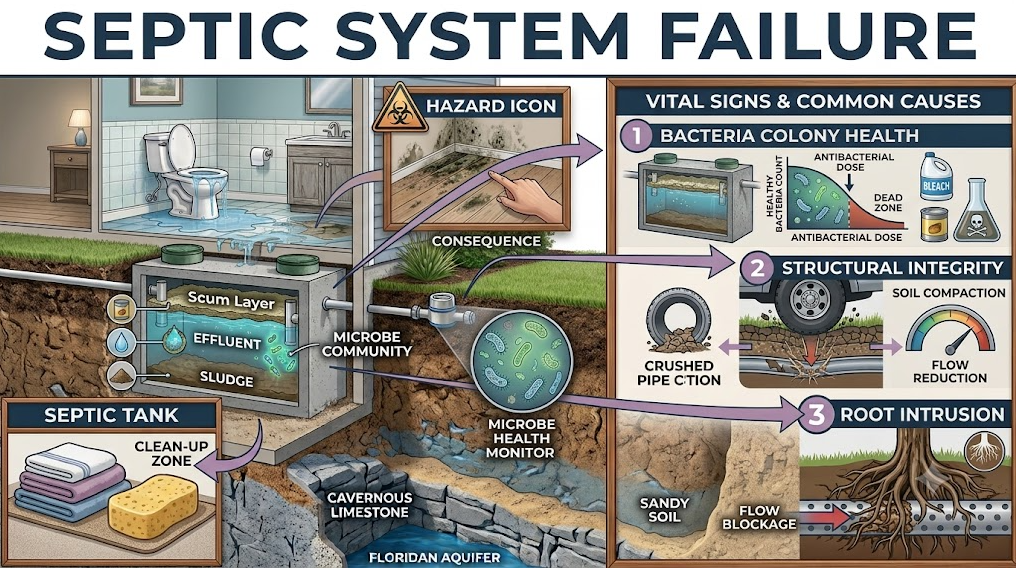
1. Soil Compaction and Root Intrusion in the Drainfield
Your drainfield (or leach field) relies on loose, porous soil to filter and absorb liquid waste safely. Driving heavy vehicles, parking cars, or building structures over this zone packs the soil tightly, crushing the underground perforated pipes and blocking water from soaking into the ground. Additionally, planting deep-rooted trees or large shrubs near the field allows aggressive roots to grow inside the pipe slots, completely blocking the flow of water.
2. Biological Failure (The “Dead Tank” Syndrome)
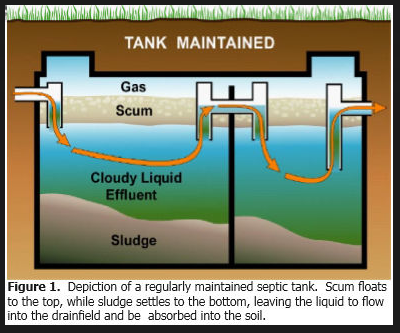
A healthy septic tank is filled with natural bacteria that constantly digest organic waste, turning solids into clear liquid effluent. When a household flushes heavy antibacterial soaps, chemical drain cleaners, or large amounts of bleach down the drain, it kills this helpful bacterial colony. Without these microbes, solid waste builds up rapidly, overflows the tank, and travels straight out into the soil lines, quickly plugging the system.
3. Mechanical Clogging of the Baffles and Filters
Every modern septic tank uses entry and exit baffles—internal T-shaped pipes—along with mesh pre-filters to stop floating grease and solid scum from escaping the tank. Over time, flushing cooking grease, wet wipes, and hair builds up a thick layer on these components. If this filter is not checked and cleaned during routine plumbing care, it will choke the system completely, causing immediate backups into your lowest home drains.
Section 2: Spotting the Early Warning Signs
Catching a septic issue before sewage actively backs up into your home can mean the difference between a simple, low-cost maintenance visit and a full system replacement. Watch for these common indicators:
- Gurgling Pipes: If your toilets or main drains make a distinct bubbling or gurgling noise when your washing machine empties or when you take a shower, your tank is struggling to breathe or vent properly.
- Slow Indoor Drains: When multiple sink, tub, and shower drains across the house slow down at the same time, the blockage is rarely a simple local clog—it almost always points to a full septic tank or a saturated drainfield. For homes facing slow main lines, our team offers professional diagnostic support outlined at our Professional Drain Cleaning and Maintenance Support page.
- Spongy Lawn or Bright Green Grass: If the grass directly over your drainfield looks remarkably vibrant and green compared to the rest of your yard, or if the soil feels damp and spongy underfoot even in dry weather, your disposal lines are overloaded and forcing effluent upward to the surface.
Section 3: Proactive Prevention Checklist
Avoiding catastrophic septic problems comes down to simple daily habits and a reliable maintenance schedule. Use this structured approach to keep your underground network operating smoothly:
| Action Item | Operational Target | Preventive Benefit |
| Schedule a Routine Pump-Out | Every 3 to 5 years | Removes thick bottom sludge before it can escape into your yard’s absorption trenches. |
| Manage Water Volumetrics | Spread out laundry loads | Prevents sudden surges of water from flooding the tank and washing solids out early. |
| Protect the Lawn Surface | Keep vehicles off the field | Avoids crushed underground pipes and packed soil. |
| Divert Surface Runoff | Direct downspouts away | Stops heavy rain from soaking the drainfield soil from above. |
If you need a professional team to handle structural plumbing updates, inspect main lines, or resolve deep backups, explore our solutions at the General Plumbing Services and Leak Prevention page.
Section 4: Upgrading and Maintaining System Flow
Taking care of your septic system also means paying close attention to your main interior lines. If your home has hard water, mineral scale can narrow your pipes, forcing water out under higher pressure and disrupting the steady settling process inside your tank.
Installing a modern water softener eliminates scale, keeps water flowing smoothly, and protects your home’s appliances. To explore how water treatment upgrades can support your property’s plumbing health, check out our solutions at our Water Softener Installation and Treatment Options portal. Furthermore, if aging main sewer lines have suffered structural damage from solid backups or root intrusion, see our repair options at our Sewer Repair and Structural Pipe Restoration portal.
Conclusion: Protect Your Investment
A private septic system is an efficient, reliable piece of engineering, but it requires careful use and consistent maintenance to last. By avoiding chemical cleaners, keeping heavy objects off your lawn, and scheduling a professional pump-out every 3 to 5 years, you can keep your system running safely for decades.
Do not wait for an unexpected emergency or a messy yard backup to take action. Contact the friendly office team at Chad’s Water Works today to schedule an expert system inspection, protect your property value, and enjoy true peace of mind. For emergency dispatch or to speak directly with our team, connect with us at Chad’s Water Works.