

Gas lines are the unsung heroes of a modern home, quietly powering everything from your water heater to your kitchen range. But because natural gas is highly combustible, a compromised line isn’t just a minor technical inconvenience—it is an immediate threat to your property and your family’s safety.
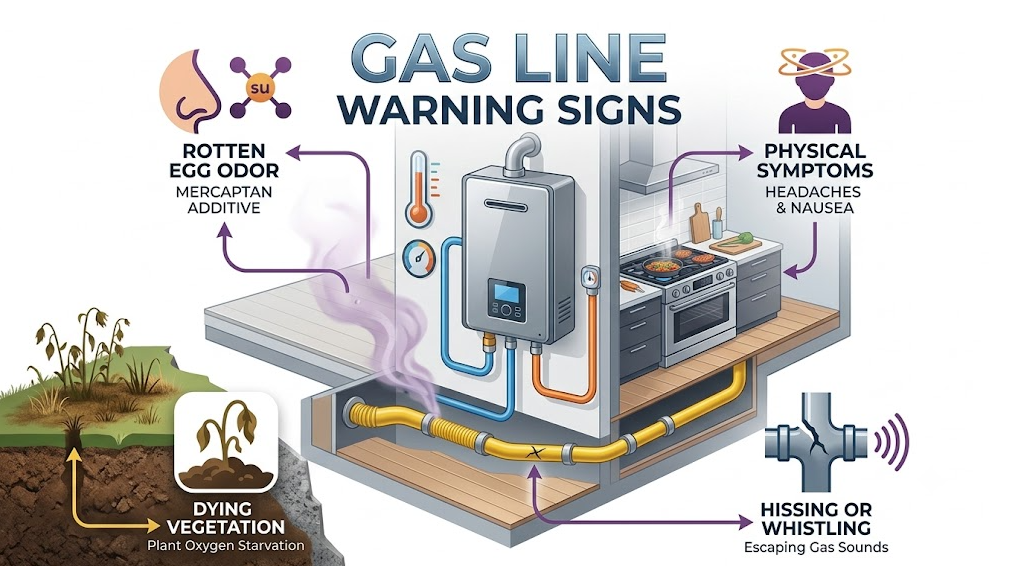
Because natural gas is naturally odorless and invisible, utility companies inject a harmless chemical called mercaptan into the lines. This gives the gas a distinct, sulfurous “rotten egg” smell that serves as your primary warning system.
If you suspect an issue, knowing what to look for can mean the difference between a simple repair and a catastrophic emergency.
In 2026, the residential gas infrastructure across Ocala and the broader 352 area code operates under continuous daily stress. Property lines are subjected to shifting sandy limestone soils, severe summer downpours, lightning-induced grounding currents, and localized chemical interactions that slowly attack buried pipe walls. Compounding these environmental factors is the aging state of standard black iron, galvanized steel, and early-generation flexible corrugated stainless steel tubing (CSST) systems in local neighborhoods.
A home’s gas line network operates as a pressurized distribution system. Even a tiny pinhole leak or a minor joint separation can allow significant volumes of highly volatile vapor to accumulate inside enclosed walls, attics, or crawlspaces. At Chad’s Water Works, we approach gas distribution safety with analytical precision. We understand that gas line issues are rarely isolated mechanical failures; they are almost always the result of structural corrosion, improper historical installations, or pressure imbalances that require immediate, code-compliant solutions to keep your household safe.
Section 1: Why the Problem is Worse Than It Looks
To understand the hidden dangers of a compromised gas line, we must look at the mechanical forces that damage pipe networks over time. Unlike water lines, which show clear evidence of failure through immediate dampness or drywall staining, a small gas leak can remain completely hidden inside walls for months while steadily filling structural cavities with combustible fuel.
The Physics of Pipe Failure: Corrosion, Stress, and Soil Chemistry
The primary cause of subterranean gas line failure in Central Florida is localized galvanic corrosion. When bare steel or iron pipes are buried in dirt, the chemical composition of our local soil can trigger an electrochemical reaction. This reaction slowly pulls metal ions away from the pipe wall, creating tiny pits that eventually turn into pinhole leaks.
+-------------------------------------------------------------+
|               SUB-TERRANEAN GAS LEAK DYNAMICS               |
|                                                             |
| [Pinhole Leak Underground] -> Gas Forces Upward Through Soil |
| [Visual Symptom]          -> Oxygen Deprivation in Root Zone|
| [Result]                   -> Rapid, Localized Patch of Dead Lawn |
+-------------------------------------------------------------+
Furthermore, standard home foundations experience minor settling and shifting over time. This structural movement puts high mechanical stress on the threaded joints and elbows of rigid gas piping. This stress can cause the pipe dope or Teflon sealing compounds inside the threads to crack and separate, leading to slow, continuous leaks at the connection points.
Environmental Indicators: What Your Yard Is Telling You
When a buried gas line leaks beneath your lawn, the gas moves upward through the soil along the path of least resistance. This movement leaves several clear clues in the landscape:
- Sub-Surface Root Asphyxiation: Natural gas displaces the oxygen that plants need to live. If you notice a localized patch of yellowing, dying grass or dead shrubs that directly follows the path of an underground line, you are likely looking at a gas leak.
- Puddle Bubbling: During regular Florida rainstorms, check any standing water near your gas meter or exterior lines. A continuous stream of bubbles rising through mud or puddles means pressurized gas is escaping from the ground.
- Mechanical Hissing: A severe crack or a loose joint on a high-pressure line will make a distinct hissing or whistling sound, which is easiest to spot near your main meter or where lines connect to outdoor appliances like pool heaters and grills.
Homeowner Warning: The Dangers of DIY Thread Sealants and Wraps
When homeowners find a gas leak using a soap-bubble test on an exposed joint, some try to fix it temporarily using retail thread tapes, epoxy putties, or automotive pipe wraps.
Our safety directive is absolute: Never attempt to patch, wrap, or seal a compromised gas line using temporary retail products. Natural gas and propane will easily dissolve or bypass temporary adhesives over time, leading to renewed leaks. Furthermore, regular iron pipes require specific heavy-wall dimensions and specialized cutting tools to handle pressure safely. Ensuring your fuel system stays safe requires professional diagnostic pressure tests and code-compliant installations. If you need assistance with gas piping systems or are planning an appliance upgrade, visit our specialized team at theGas Safety and Specialized Piping Supportpage.
Section 2: The Professional Approach vs. DIY
Gas piping systems sit at a critical intersection of life safety, combustion physics, and strict local building laws. Working on these lines requires specialized training and specialized equipment that go far beyond standard residential plumbing work.
Retail Components vs. Commercial-Grade Infrastructure
The generic pipe fittings and flexible connectors available at big-box home improvement stores are often built with thinner walls and lower-grade alloys to keep retail costs down. Our team relies exclusively on heavy-duty, professional-grade materials engineered to withstand environmental stress and chemical corrosion.
| Material Feature | Big-Box Retail Components | Chad’s Professional-Grade Standards |
| Flexible Connectors | Light-gauge brass or thin stainless steel (vulnerable to kinking and micro-fractures) | Heavy-wall, polymer-coated corrugated stainless steel tubing (CSST) with advanced arc-resistant jackets |
| Shutoff Valves | Economy-grade light brass valves with synthetic internal seals | Heavy-duty, full-port forged brass gas cocks built for tight, long-term seals |
| Pipe Material | Economy imported black iron pipe | Domestically manufactured, high-test schedule 40 black steel or specialized yellow polyethylene pipe |
| Joint Sealing | Standard retail-grade pipe dopes | Premium, chemically inert gas-rated compounds that won’t shrink or crack under high heat |
The Chad’s Water Works Diagnostic Sequence
We never guess where a gas leak is located. Our technicians use a strict, scientific diagnostic process to find the source of the leak and verify that your complete fuel system is fully sealed and safe to operate.
+-------------------------------------------------------------+
|              GAS SYSTEM TESTING TIMELINE                    |
|                                                             |
| [1. Pressure Drop Test] ===> Measures entire system for leaks|
| [2. Electronic Sniffing]===> Pinpoints exact leak locations  |
| [3. Structural Repair]  ===> Replaces bad pipe and fittings |
| [4. Long-Term Lock Test]===> Verifies zero pressure loss    |
+-------------------------------------------------------------+
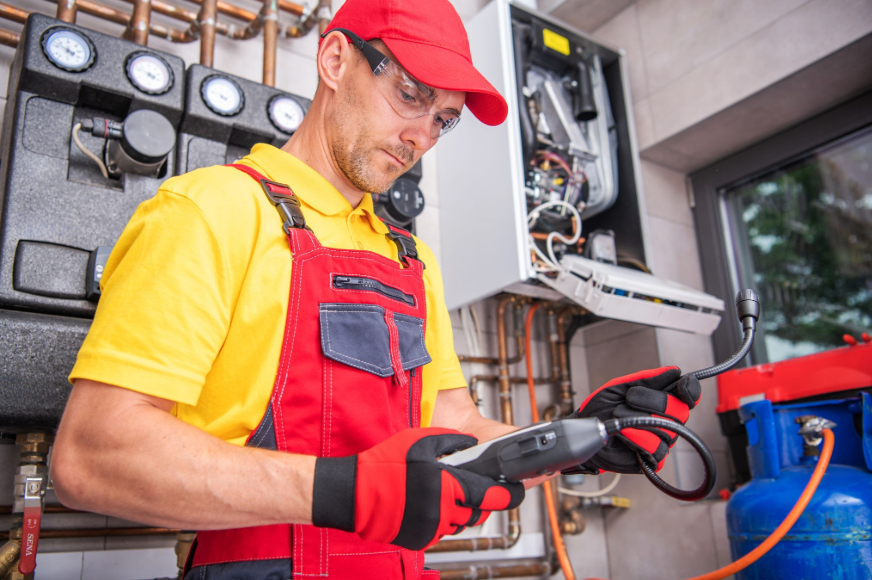
- System Pressure-Drop Isolation: We disconnect your gas appliances and attach a precision mechanical or digital manometer to the line. We pump the system full of compressed air and run a strict timed pressure test to confirm if any leaks exist across the entire network.
- Electronic Gas Sniffing: If the system fails the pressure test, we sweep the entire length of the exposed and in-wall lines using an advanced electronic gas sniffer. This tool can detect gas concentrations as small as a few parts per million, allowing us to pinpoint the exact location of a leak behind drywall or inside cabinetry.
- Targeted Section Replacement: We cut out the damaged section of pipe, thread new schedule 40 black steel lines to exact measurements, and install heavy-duty, code-compliant isolation valves.
- Final Structural Verification: After the repairs are complete, we run a final, high-pressure lock test to ensure the system holds pressure with zero drop. This step confirms your entire fuel network is perfectly sealed before we turn your gas appliances back on.
If during our comprehensive home safety check we discover that your utility lines or underslab plumbing systems are showing signs of age or corrosion, we provide comprehensive repair options outlined at our General Plumbing Repair and Preventive Maintenance portal.
The Master Plumber’s Perspective on Life-Safety Systems
“Working with gas lines leaves zero room for error. A small mistake on a water line results in a wet floor; a small mistake on a gas line can cause a catastrophic explosion or severe carbon monoxide poisoning. Professional gas fitters spend years learning how to calculate fuel loads, manage proper ventilation venting, and execute leak-free installations. When you hire a certified specialist, you are investing in the long-term safety of your family and the structural security of your home.”
Section 3: The Real Cost of Waiting
Ignoring minor gas line warning signs—like a faint, occasional smell near an appliance, a burner that burns yellow, or a slight whistling noise near your meter—can quickly turn a simple preventive maintenance call into a complicated property emergency.
Financial Scenario Analysis: Proactive vs. Reactive Paths
The table below outlines three distinct paths, showing the real financial impact of delaying a necessary gas line inspection and repair.
| Cost Impact Factor | Proactive Diagnostic Repair | Delayed Emergency Service | Uncontrolled Leaks & Failure |
| Service and Labor Costs | Standard flat-rate pricing | Emergency dispatch premium rates | Emergency overtime labor + utility lock-out fees |
| Property Structural Impact | $0.00 (controlled work area) | Minimal (minor drywall access hole) | Massive (potential fire damage, structural reconstruction, code violations) |
| Utility Service Availability | Zero service disruption | 24 to 48 hours without hot water or heat | Full system shutdown by the utility company; red-tag lock-out |
| Permit and Code Clearance | Handled smoothly during normal hours | Fast-tracked emergency authorization | Comprehensive city inspections and full system pressure re-testing required |
| Household Safety Risk | Controlled and eliminated immediately | Elevated risk of carbon monoxide exposure | High risk of explosive ignition or mandatory home evacuation |
System Longevity and Managing Local Code Realities
Delaying a necessary repair can cause a local utility company to step in and issue a formal “red tag” lock-out. If a utility technician smells gas or finds a leak during a routine check, they will shut off the main gas valve and lock it out for safety.
Once a system is red-tagged, the gas cannot be turned back on until a licensed plumbing contractor runs a full system pressure test, pulls local city building permits, completes the repair, and coordinates a formal inspection with the local municipality. This process can leave your home without hot water, cooking options, or heat for days. Taking care of system updates early helps you avoid unexpected red-tag shutdowns and keeps your monthly utility bills low. If you have concerns about older pipes or want to check your system’s efficiency, see how we can help at our Drain and Pipe Structural Maintenance Support section.
Section 4: The Chad’s Water Works Standard
When you trust Chad’s Water Works with your gas distribution lines, you are partnering with an award-winning team that prioritizes safety and professional craftsmanship above all else.
  🥇 "BEST OF THE 352" GOLD WINNER (2024 & 2025) 🥇
───────────────────────────────────────────────────────
  Verified Licensing  •  2026 Florida Building Code Compliance
Award-Winning Community Focus
We are proud to be named the “Best of the 352” Gold Winner for both 2024 and 2025. This honor reflects our team’s daily commitment to every family we serve across Ocala and surrounding Marion County neighborhoods. We never take shortcuts with your safety. We complete every job to the highest standards, ensuring your home remains safe and secure.
Absolute Safety Code Compliance
Our gas line repairs and system upgrades are anchored in absolute compliance with the 2026 Florida Building Code. Our strict safety standards include:
- Official Permit Handling: We manage the entire local permitting and inspection process, keeping your home compliant and protecting your property value during future real estate sales.
- Bonding and Grounding Checks: We verify that your gas lines are properly bonded to your home’s electrical grounding system to prevent damage from nearby lightning strikes.
- Appliance Load Balancing: We calculate fuel demands using specific plumbing equations to ensure your line pressure is perfectly balanced for all your gas appliances.
- Verified Trade Standards: We track updates from leading regulatory bodies like the International Association of Plumbing and Mechanical Officials, which you can read about at IAPMO.
Section 5: What to Expect: The Client Journey
We understand that scheduling utility or plumbing work can break up your normal schedule. That is why we use a clear, organized process to keep you informed from the first call to the final safety check.
[1. On-Site Inspection] -> [2. Precision Safety Fix] -> [3. Full System Pressure Test]
Step-by-Step Service Delivery
- On-Site Inspection: Our technician arrives in a fully equipped service vehicle, completes an initial safety sweep using electronic gas sniffers, and provides clear, upfront pricing options for the work.
- Precision Safety Fix: Our team sets up drop cloths to protect your home, safely cuts out the damaged or corroded pipe, and installs heavy-duty, code-compliant lines and valves.
- Full System Pressure Test: We hook up precision manometers to run a final pressure test, ensuring your entire gas line network is completely sealed and safe before we turn your gas back on.
Real Success in Our Community: A Silver Springs Shores Case Study
A homeowner in Silver Springs Shores recently noticed that their kitchen range was producing weak, lazy yellow flames instead of a crisp blue fire. They also noticed a faint sulfur smell inside the utility closet near their water heater. They contacted our office to schedule a safety check before the issue could worsen.
Our technician ran an electronic sniffer test and found a significant gas leak behind the drywall, caused by an old fitting that had cracked due to minor foundation settling. We carefully cut into the drywall, removed the bad section of pipe, and installed a heavy-walled black steel line with an updated isolation valve.
We then ran a full system pressure test to confirm the network was completely sealed. Once the gas was turned back on, the stove burners returned to a clean, steady blue flame, and the home was completely safe. If you have an older gas water heater that needs to be replaced after a line repair, explore your replacement options at our Water Heater Replacement Options page.
Section 6: Planning for the Future: High-Efficiency Upgrades
When updating or repairing an older gas line system, many homeowners choose to upgrade their gas appliances to modern, high-efficiency systems. One of the most common upgrades is swapping an old storage water heater for an advanced tankless system.
TRADITIONAL APPLIANCE VENTING (Heat and Exhaust Loss):
[Standard Burner] ──> Heavy Air Draft ──> Continuous Vertical Vent Loss

MODERN TANKLESS GAS CONFIGURATION (Precision On-Demand):
[Electronic Ignition] ──> Sealed Venting ──> Up to 96% Thermal Efficiency
Modern gas-fired tankless water heaters deliver an endless supply of hot water while lowering your monthly energy use. Because they only heat water when a faucet is turned on, they eliminate the energy waste common with older tank systems. These high-efficiency upgrades include several key benefits:
- Continuous Hot Water on Demand: These systems heat water instantly as it flows through the unit, meaning you will never run out of hot water, even during times of peak household demand.
- Lower Energy Bills: By eliminating the need to keep 50 gallons of water hot all day and night, tankless units can reduce your monthly gas bills by up to 30%.
- Compact, Wall-Mounted Design: Free up valuable floor space in your garage or utility room with a compact system that mounts securely to the wall.
- Eco-Friendly Performance: These systems meet strict environmental guidelines and align with energy-conservation criteria managed by the Environmental Protection Agency, which you can learn more about at EPA WaterSense.
If you are interested in improving your home’s energy efficiency with a modern system, check out our installation services at our Tankless Water Heater Installation and Conversions page.
Conclusion: The Fix Starts with a Call
Your home’s gas lines are a critical system that keeps your household running smoothly and protects your family’s daily comfort. Managing underground pipe corrosion, keeping up with changing building codes, and fixing small leaks early are essential steps to protect your property and keep your home safe.
               CHAD'S WATER WORKS PROMISE
────────────────────────────────────────────────────────
  24/7 Emergency Response  •  Expert Code Compliance
  Gold-Winner Standards    •  Upfront, Transparent Estimates
Whether you are noticing a faint smell near an appliance, seeing weak burner performance, or ready to update your older pipes for a high-efficiency system, our team is here to help. As your trusted “Best of the 352” Gold Winner, we bring certified expertise, upfront pricing, and a commitment to quality to every job we do.
Do not wait for a small leak to turn into an expensive property emergency or a major red-tag shutdown. Take control of your home’s utility health today. Contact our office team right away to schedule an expert diagnostic safety check, protect your property investment, and secure absolute peace of mind for your household.
To learn more about local health guidelines or explore regional safety rules, check out the resources managed by state officials at Florida Health, or connect directly with our service dispatch team by visiting our main communication portal at Chad’s Water Works. Our certified professional technicians are standing by to keep your home’s utility systems operating safely, reliably, and efficiently for years to come.