
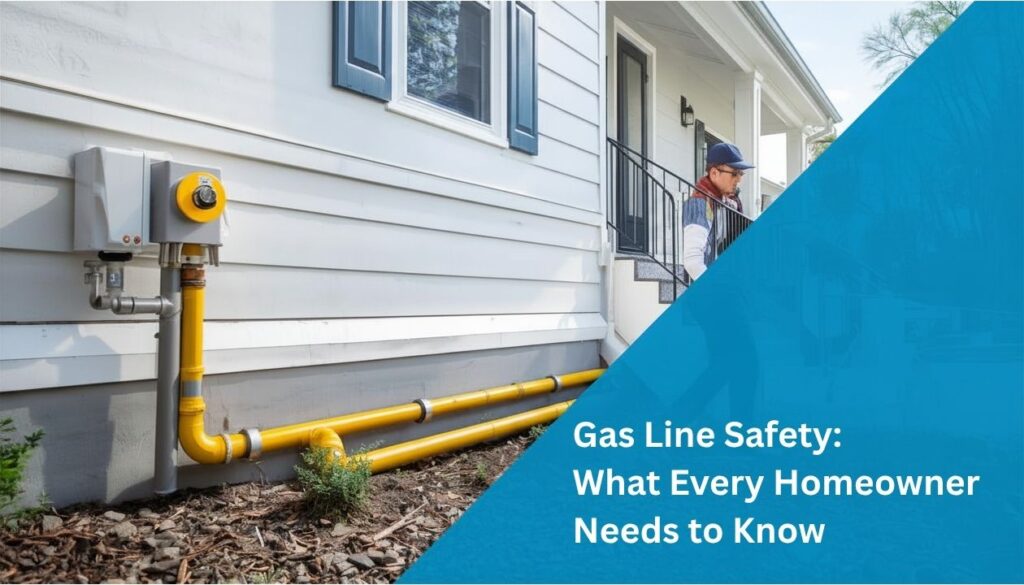

The Invisible Energy Network
For millions of homeowners, natural gas and propane are the quiet workhorses of domestic comfort. From fueling high-efficiency tankless water heaters and professional-grade cooking ranges to heating backyard pool loops, gas utilities provide exceptional thermal efficiency. However, because gas plumbing infrastructure is hidden behind drywall partitions and buried deep beneath landscaping, it is easy to forget that these lines operate under constant, volatile pressure.
When it comes to home maintenance, understanding gas line safety is not merely a matter of mechanical efficiency—it is a critical boundary line protecting your family’s lives and your property’s structural equity. A minor fluid leak from a water line results in localized drywall damage; a minor vapor leak from a gas line can result in a catastrophic, life-altering structural event within seconds.
At Chad’s Water Works, our specialized gas service division is dedicated to shifting Ocala homeowners from a posture of passive exposure to one of proactive, engineered security. Whether your property utilizes municipal natural gas networks in historic Downtown Ocala or private propane tanks in the rural expanses of Marion County, implementing professional safety protocols ensures your home remains a safe, efficient sanctuary.
Section 1 — The Anatomy of a Gas Leak: Red Flags You Cannot Ignore
Because natural gas and propane are naturally completely odorless, colorless, and tasteless, utility providers mix a harmless chemical compound called mercaptan into the fuel stream. This additive infuses the gas with a highly distinctive, pungent sulfur odor resembling rotten eggs. Recognizing this scent is your primary line of defense, but it is not the only warning sign your infrastructure will exhibit.
The Three Dimensions of Gas Leak Detection
A compromised gas delivery network will reveal itself through three distinct physical channels:
- Auditory Warning Signals: A high-pressure gas line breach frequently produces a low, persistent hissing or whistling sound. This is especially noticeable near appliance connection valves, flexible utility regulators, or where structural lines enter your home’s foundation.
- Environmental Visual Indicators: If an underground gas line routing fuel to an outdoor kitchen or pool heater suffers a structural fracture, the escaping fuel will suffocate the root systems of surrounding vegetation. If you notice a localized patch of perfectly dead, yellowed grass or soil bubbling during a rain shower while the rest of your yard is healthy, an underground line breach is actively occurring.
- Physical Physiological Symptoms: If a slow, unmetered gas leak is trapped within an unventilated attic or crawlspace, residents may experience sudden, unexplained physical symptoms. This includes persistent dizziness, unexplained headaches, sudden nausea, eye irritation, or a feeling of lethargy that completely vanishes when stepping outside into fresh air.
CRITICAL HOMEOWNER WARNING
The Danger of Spark Generation: The absolute single greatest error a homeowner can make during a suspected gas emergency is creating a localized electrical arc. A tiny, invisible spark is more than enough to ignite accumulated gas vapors in an enclosed room.
What NOT to Touch: If you smell gas, do not flip a light switch on or off. Do not unplug an appliance. Do not use your home phone or cellular device inside the building. Do not even open or close an automated garage door. Leave the property exactly as it is and walk far away before interacting with any technology.
Section 2 — Immediate Emergency Protocol (The 3-Step Escape Plan)
If a gas leak is verified or strongly suspected inside your home, there is no room for hesitation, speculation, or amateur troubleshooting. Execute the following tactical steps immediately:
1.Evacuate the Structure Instantly:Immediate Action.
Have every occupant and pet exit the building immediately. Do not stop to gather personal belongings, close open windows, or shut down computers. Leave the entry door wide open behind you to allow trapped vapors to vent outward into the atmosphere.
2.Establish a Safe Safety Perimeter:Distance Matters.
Move a minimum of 100 to 150 feet away from the structure. Ensure you are well clear of the property line and positioned upwind from the building, preventing drifting gas clouds from enveloping your evacuation group.
3.Engage Emergency Services:Outside the Zone.
Only after you have safely crossed your safety perimeter should you retrieve your cellular device. Dial 911 and your regional gas utility provider immediately to report the emergency so first responders can isolate the main municipal street tap.
Section 3 — Why Gas Infrastructure Demands Master-Level Certification
Many homeowners pride themselves on managing basic household updates, such as replacing a sink faucet or installing a smart thermostat. However, gas line infrastructure has absolute zero tolerance for DIY manipulation or amateur repair attempts. Working with gas requires a deep understanding of fluid dynamics, metallurgy, chemistry, and strict structural code enforcement.
[Gas Manifold Assembly] ──> [Sch. 40 Black Iron Pipe] ──> [Thread Compound Application]
                                                                    │
[Total Safety Certification] <── [Electronic Leak Detection] <── [Nitrogen Pressure Testing]
When our certified technicians install or modify a gas line, we utilize heavy-duty Schedule 40 Black Iron Pipe or specialized, precision-engineered Corrugated Stainless Steel Tubing (CSST). Every single mechanical joint must be threaded with perfect precision and sealed using specialized, gas-rated pipe dope or yellow PTFE tape formulated specifically to resist chemical breakdown from hydrocarbon gases.
Once an installation or gas line repair is physically completed, we do not simply turn on the fuel and assume it is secure. We conduct rigorous nitrogen pressure drop testing and deploy high-sensitivity electronic sniffer telemetry capable of tracking gas concentrations down to parts per million. This meticulous process ensures your home adheres to all updates of the Florida Building Code 2026 compliance parameters, safeguarding your property value and your family’s safety.
Section 4 — The Cost of Neglect vs. Proactive Protection
Allowing a gas delivery network to degrade without routine professional assessment exposes your home to substantial financial and structural liability. Over time, shifting foundations can stress joints, and standard appliances can develop weak seals due to persistent vibration.
The following data matrix illustrates the distinct financial and safety profiles of gas system management:
| Infrastructure Maintenance Status | Required Professional Action | Diagnostic Testing Method | Total Household Safety Profile |
| Proactive Annual Inspection | $150 – $300 | Electronic sniffer audit & visual valve tracking. | Absolute Security: 100% peace of mind. |
| Appliance Valve Leak | $250 – $500 | Localized component isolation and line replacement. | Controlled Risk: Rapid containment before escalation. |
| Main Underground Line Rupture | $1,500 – $4,500+ | Non-invasive gas tracking and underground pipe line restoration. | Severe Hazard: High-risk excavation; immediate system shutdown required. |
| Systemic Corrosive Degradation | $5,000 – $12,000+ | Complete property re-pipe with modern CSST/Black Iron. | Extreme Liability: Immediate building code violation; utility service suspension. |
Neglecting minor warning signs, such as a faint, occasional whiff of sulfur near your water heater or laundry room, can result in the rapid shutdown of your entire municipal service hookup. Taking care of these systems early prevents the need for an expensive emergency water heater replacement or complex gas manifold rebuilding down the road.
Section 5 — The Chad’s Water Works Standard of Excellence
We do not treat gas line service as an optional side business; we treat it as an elite technical discipline. Chad’s Water Works has been voted the Gold Winner for “Best of the 352” for both 2024 and 2025, reflecting our absolute commitment to mechanical excellence and customer safety across Marion County.
Our field crews consist of master-certified plumbing and gas technicians who are fully licensed, bonded, and heavily trained in both advanced commercial systems and detailed residential infrastructure. We coordinate closely with municipal inspectors and code enforcement offices to guarantee that every single general plumbing repair or major appliance integration complies perfectly with regional and state safety mandates.
Because we are deeply rooted in the local community, we design our services around the unique environmental conditions, sandy soil profiles, and regional shifting trends specific to Ocala, providing a level of protection national service networks simply cannot mirror.
Section 6 — Comprehensive Home Safety Integration
When our team takes over the management of your home’s gas network, we execute a complete safety integration process:
- System-Wide Pressure Audit: We isolate your home from the main municipal supply line and run a high-precision pressure drop test to confirm that your hidden in-wall pipe system is completely airtight.
- Appliance Safety Configuration: We meticulously evaluate the flexible connector lines and shutoff valves for every gas appliance, replacing outdated brass lines with modern, polymer-coated stainless steel connectors.
- High-Efficiency Mechanical Upgrades: If your old water heating equipment is showing signs of structural wear, we can transition your home to a state-of-the-art tankless water heater installation system, maximizing hot water delivery while slashing monthly fuel consumption.
- Complete Utility Optimization: Beyond standard gas lines, our multi-licensed team provides single-point technical accountability for your home’s complex water softener installation, advanced drain cleaning, and rural septic processing needs.
Conclusion — True Safety Begins with Action
When it comes to gas line safety, the best time to fix a potential issue is before it ever becomes an emergency.
Allowing unverified gas lines or aging appliance connections to remain unmonitored is a risk your family simply shouldn’t take. Let our master certified technicians provide your home with the detailed diagnostic care and structural precision needed to keep your property running flawlessly.
Take complete control of your home’s safety profile today.
Contact our central scheduling and technical dispatch team directly by calling (352) 598-2557 or connect with our service team via email at scheduling@chadswaterworks.com to schedule a comprehensive gas infrastructure safety audit. Trust the two-time “Best of the 352” Gold Winner to keep your home, your family, and your investments perfectly secure.